


EU Shifts Import Regulations: Vietnamese Agricultural Sector Must Transform from the Production Base
28/09/2026 - 14:30:32 1 Industry News
Every year, the European Union (EU) imports approximately $35 billion worth of agriculture, forestry, and fishery products, serving as one of the three largest markets for Vietnam in these commodity groups. Currently, this market is rapidly shifting from border product inspection to requiring transparency, traceability, and strict control starting right from the production process.
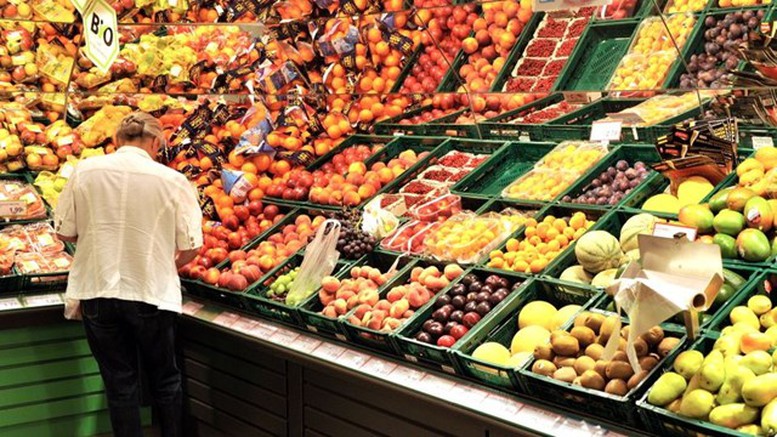
Photo: Internet.
From Tightening Residue Limits to Farm-Level Control: Opening Doors for Processed Goods
One of the most evident shifts in the EU market is the continuous updating and raising of food safety standards, particularly Maximum Residue Limits (MRLs).
According to Mr. Ngo Xuan Nam, Deputy Director of the Vietnam SPS Office, since the beginning of 2026, the EU has issued around 90 notifications regarding changes to food safety regulations. Recently, the EU released seven notifications adjusting MRLs for a range of active substances, several of which are currently permitted in Vietnam but may be reduced to very low thresholds, around 0.01–0.05 ppm.
These changes directly impact many of Vietnam's key agricultural exports to the EU, including chili peppers, bell peppers, mangoes, tea, coffee, and black pepper.
Citing specific examples, Mr. Ngo Xuan Nam noted that among the EU's seven new notifications, two active substances are currently authorized for use in Vietnam. While domestic regulations may permit residue limits of up to 10 ppm, the EU plans to apply a threshold of just 0.01–0.05 ppm for products such as mangoes and tomatoes.
This highlights a crucial shift for exporting enterprises: products that comply with domestic regulations do not automatically meet the requirements of the EU market.
Instead of waiting to test shipments prior to export, businesses must enforce strict controls right from the start of production—from selecting active substances, dosages, and application timing to observing pre-harvest intervals—to ensure products comply with the importing market's MRLs.
The new regulations announced by the EU are scheduled to be published on March 1, 2027, and will take effect 20 days later. Vietnam has approximately six months to prepare, adjust production protocols, and establish control mechanisms. For sectors with long production cycles, this is a relatively short timeframe to transform production processes.
Alongside residue limits, the EU maintains its control mechanisms for high-risk product groups.
Vietnam currently has four product groups subject to border inspection frequencies: bell peppers, dragon fruit, durian, and okra. Every six months, the EU reviews and reassesses inspection frequencies for each product group and country.
The EU has also published a list of quarantine pests to be controlled at its borders, including fruit flies detected on Vietnamese pomelos. According to recommendations from the Vietnam SPS Office, to boost pomelo exports, specialized agencies and enterprises must control plant pests right at the production zones.
However, the EU market is not only tightening restrictions. According to Mr. Ngo Xuan Nam, the EU is reducing border checks for certain low-risk processed foods, such as processed cereals, potato chips, processed fruits and vegetables, and sauces. This presents an opportunity for Vietnamese enterprises to increase the proportion of processed products.
Thus, the EU market is giving rise to two parallel trends: tightening controls on high-risk commodity groups while facilitating easier access for low-risk processed items.
This serves as a signal for businesses to re-evaluate their product structures rather than relying solely on exporting raw materials or fresh produce.
Digitization Will Become a Market Access Prerequisite
Another long-term shift is the EU’s acceleration of digital procedures for imported agricultural goods.
According to Mr. Tran Van Cong, Agricultural Counselor at the Vietnamese Delegation to the EU, the EU is preparing to roll out the Electronic Non-Customs System for imported agricultural products (ELAN), which is expected to be fully implemented by January 17, 2028. The system aims to digitize the issuance, management, and verification of non-customs documents, enabling real-time verification, reducing paperwork, and shortening clearance times.
For Vietnam, this means that data capabilities will increasingly become a core component of export competitiveness.
Mr. Tran Van Cong emphasized that Vietnam has roughly 1.5 years to accelerate agricultural data digitization, standardize documentation, and streamline management processes to align with ELAN.
Enterprises must therefore not only stay informed about current regulations but also track upcoming changes to allow sufficient time for adjustment.
"Updating new EU regulations must be executed synchronously across regulatory agencies, enterprises, and producers", Mr. Tran Van Cong stressed.
Coffee serves as a prime example of the transition from product inspection to full supply chain control.
Vietnam’s coffee industry allocates approximately 85% of its output for export. In this context, the EU Deforestation Regulation (EUDR) requires enterprises to prove the origin and legal status of cultivated land, confirming that production is not linked to deforestation.
According to Mr. Bach Thanh Tuan, Vice Chairman of the Vietnam Coffee - Cocoa Association (VICOFA), Vietnam’s coffee exports reached approximately $9 billion in 2025. Meeting new international market standards is thus becoming increasingly vital for the sector's competitiveness.
From a sustainable development perspective, Ms. Nguyen Viet Ha, Senior Sustainability Manager at 4C Services, noted: "Traceability and sustainable production requirements also serve as a catalyst for enterprises and farmers to standardize their supply chains."
To meet these demands, changes cannot occur solely among exporting enterprises. From smallholder farmers, local collectors, and intermediaries to processing facilities, every stage must possess the capacity for verification and data digitization.
According to Mr. Tran Van Cong, the fundamental requirement is to shift from an "inspect to export" mindset to "controlling production to meet export standards." For commodities facing high risks of pesticide residues or pests, control must begin at raw material source areas, tied to the proper use of agricultural inputs, product traceability, and pre-harvest monitoring.
For Vietnamese businesses, adapting to the EU market is increasingly tied to three imperatives: proactively updating regulations, reorganizing raw material zones alongside data digitization, and boosting deep processing to enhance product value.
This is also the key to turning the EU’s rising market standards from a mandatory requirement into a driving force for reorganizing production toward transparency, safety, and sustainability.
One of the most evident shifts in the EU market is the continuous updating and raising of food safety standards, particularly Maximum Residue Limits (MRLs).
According to Mr. Ngo Xuan Nam, Deputy Director of the Vietnam SPS Office, since the beginning of 2026, the EU has issued around 90 notifications regarding changes to food safety regulations. Recently, the EU released seven notifications adjusting MRLs for a range of active substances, several of which are currently permitted in Vietnam but may be reduced to very low thresholds, around 0.01–0.05 ppm.
These changes directly impact many of Vietnam's key agricultural exports to the EU, including chili peppers, bell peppers, mangoes, tea, coffee, and black pepper.
Citing specific examples, Mr. Ngo Xuan Nam noted that among the EU's seven new notifications, two active substances are currently authorized for use in Vietnam. While domestic regulations may permit residue limits of up to 10 ppm, the EU plans to apply a threshold of just 0.01–0.05 ppm for products such as mangoes and tomatoes.
This highlights a crucial shift for exporting enterprises: products that comply with domestic regulations do not automatically meet the requirements of the EU market.
Instead of waiting to test shipments prior to export, businesses must enforce strict controls right from the start of production—from selecting active substances, dosages, and application timing to observing pre-harvest intervals—to ensure products comply with the importing market's MRLs.
The new regulations announced by the EU are scheduled to be published on March 1, 2027, and will take effect 20 days later. Vietnam has approximately six months to prepare, adjust production protocols, and establish control mechanisms. For sectors with long production cycles, this is a relatively short timeframe to transform production processes.
Alongside residue limits, the EU maintains its control mechanisms for high-risk product groups.
Vietnam currently has four product groups subject to border inspection frequencies: bell peppers, dragon fruit, durian, and okra. Every six months, the EU reviews and reassesses inspection frequencies for each product group and country.
The EU has also published a list of quarantine pests to be controlled at its borders, including fruit flies detected on Vietnamese pomelos. According to recommendations from the Vietnam SPS Office, to boost pomelo exports, specialized agencies and enterprises must control plant pests right at the production zones.
However, the EU market is not only tightening restrictions. According to Mr. Ngo Xuan Nam, the EU is reducing border checks for certain low-risk processed foods, such as processed cereals, potato chips, processed fruits and vegetables, and sauces. This presents an opportunity for Vietnamese enterprises to increase the proportion of processed products.
Thus, the EU market is giving rise to two parallel trends: tightening controls on high-risk commodity groups while facilitating easier access for low-risk processed items.
This serves as a signal for businesses to re-evaluate their product structures rather than relying solely on exporting raw materials or fresh produce.
Digitization Will Become a Market Access Prerequisite
Another long-term shift is the EU’s acceleration of digital procedures for imported agricultural goods.
According to Mr. Tran Van Cong, Agricultural Counselor at the Vietnamese Delegation to the EU, the EU is preparing to roll out the Electronic Non-Customs System for imported agricultural products (ELAN), which is expected to be fully implemented by January 17, 2028. The system aims to digitize the issuance, management, and verification of non-customs documents, enabling real-time verification, reducing paperwork, and shortening clearance times.
For Vietnam, this means that data capabilities will increasingly become a core component of export competitiveness.
Mr. Tran Van Cong emphasized that Vietnam has roughly 1.5 years to accelerate agricultural data digitization, standardize documentation, and streamline management processes to align with ELAN.
Enterprises must therefore not only stay informed about current regulations but also track upcoming changes to allow sufficient time for adjustment.
"Updating new EU regulations must be executed synchronously across regulatory agencies, enterprises, and producers", Mr. Tran Van Cong stressed.
Coffee serves as a prime example of the transition from product inspection to full supply chain control.
Vietnam’s coffee industry allocates approximately 85% of its output for export. In this context, the EU Deforestation Regulation (EUDR) requires enterprises to prove the origin and legal status of cultivated land, confirming that production is not linked to deforestation.
According to Mr. Bach Thanh Tuan, Vice Chairman of the Vietnam Coffee - Cocoa Association (VICOFA), Vietnam’s coffee exports reached approximately $9 billion in 2025. Meeting new international market standards is thus becoming increasingly vital for the sector's competitiveness.
From a sustainable development perspective, Ms. Nguyen Viet Ha, Senior Sustainability Manager at 4C Services, noted: "Traceability and sustainable production requirements also serve as a catalyst for enterprises and farmers to standardize their supply chains."
To meet these demands, changes cannot occur solely among exporting enterprises. From smallholder farmers, local collectors, and intermediaries to processing facilities, every stage must possess the capacity for verification and data digitization.
According to Mr. Tran Van Cong, the fundamental requirement is to shift from an "inspect to export" mindset to "controlling production to meet export standards." For commodities facing high risks of pesticide residues or pests, control must begin at raw material source areas, tied to the proper use of agricultural inputs, product traceability, and pre-harvest monitoring.
For Vietnamese businesses, adapting to the EU market is increasingly tied to three imperatives: proactively updating regulations, reorganizing raw material zones alongside data digitization, and boosting deep processing to enhance product value.
This is also the key to turning the EU’s rising market standards from a mandatory requirement into a driving force for reorganizing production toward transparency, safety, and sustainability.
Source: https://baochinhphu.vn/