


How Science and Technology Are Unlocking New Potential for Vietnam’s Agri-Exports
28/09/2026 - 13:46:11 1 Industry News
In the first nine months of 2026, Vietnam’s exports of agriculture, forestry, and fishery products grew by 7.8% year-on-year. However, the divergence across commodity groups highlights an urgent need to shift from output-driven growth to enhancing quality, added value, deep processing, and the application of science and technology.
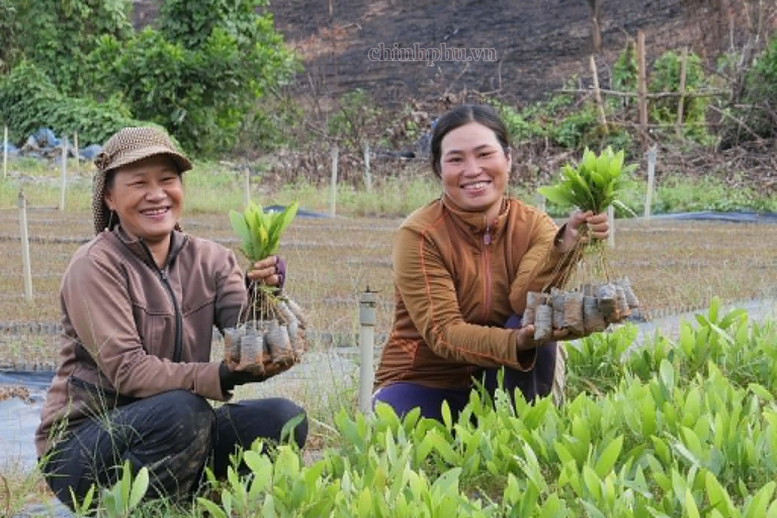
Crop variety technology contributes to improving production quality in the forestry sector in particular and the cultivation sector in general. Photo: Chinhphu.vn/Do Huong
Science and technology must address the sector’s challenges
In the first nine months of 2026, agricultural, forestry and fishery exports are estimated at $56.3 billion, up 7.8% year on year, while the trade surplus reached approximately $16.9 billion, up 7.4%. However, behind these positive figures is a clear divergence among commodity groups.
The trade surplus in agricultural products fell 27.7% to $4.32 billion, while livestock products recorded a trade deficit of approximately $3.43 billion, up 20.9%. Some commodity groups remain heavily dependent on a few markets. China accounts for about 63% of fruit and vegetable export value, 58.7% of rubber exports and around 91% of cassava exports, while about 50.1% of wood and wood product export value is concentrated in the United States.
These figures show that the sector’s challenge is not only to open up more markets, but also to change how production, processing and exports are organized. Markets need to become an input signal for production, rather than merely a destination for products after they have been produced.
For coffee, the direction is to shift from increasing volume to increasing value by improving quality, grading, roasting and grinding, producing instant coffee and specialty coffee, and building brands. For rice, alongside maintaining existing markets, the sector needs to increase the share of fragrant and high-quality rice and expand into markets beyond traditional destinations.
For fruit and vegetables, instead of mainly exporting fresh fruit, the sector needs to better tap the value of products derived from the same raw materials. Durian is one example: besides fresh fruit, there is room for frozen products, puree, dried products and other processed products.
In this process, science and technology are being directly applied to production and market challenges.
The Ministry of Agriculture and Environment recently asked agencies, businesses, experts and scientists to propose tasks for developing strategic technologies and technology products. The proposals are required to stem from practical needs, market demand and the strengths of sectors and localities, with priority given to tasks capable of mastering technologies, creating high-value-added products, and having potential for application, commercialization and scaling up.
This shows a shift in approach from “research to produce results” to “research to solve problems and create value.” Technology must answer specific questions: how to improve quality, reduce post-harvest losses, deepen processing, save raw materials and energy, control residues, ensure traceability, reduce emissions and better forecast market demand.
Alongside production technology, data on growing areas, farming areas, packing facilities, traceability, logistics and markets also need to be connected, creating a foundation for a more modern production and export system.
From “opening markets” to “retaining markets”
Behind the overall export growth are signals that room for growth through higher volumes is narrowing.
In the first nine months, coffee export volume increased 15.4% to approximately 1.44 million tonnes, but export value fell 7.3% to $6.54 billion as the average export price declined 19.7%. Similarly, both rice export volume and value fell: volume decreased 6.1% to around 6.4 million tonnes, while export value dropped 10.9% to approximately $3.11 billion.
These figures show that selling more does not necessarily mean earning more. The value of agricultural products increasingly depends on quality, processing, standards, branding and the ability to meet increasingly stringent market requirements.
To reach the 2026 export target of $74.212 billion, the agricultural sector needs an additional approximately $17.91 billion in the final three months of the year, equivalent to an average of nearly $5.97 billion per month. Wood and wood products, seafood, fruit and vegetables, rubber, and livestock products are forecast to have the potential to meet or exceed their targets, while coffee, cashews, cassava and tea remain under pressure.
Alongside maintaining sectors with advantages, the agricultural sector will continue to diversify markets and make better use of markets in the EU, Japan, South Korea, Australia and CPTPP and RCEP countries, while expanding opportunities in the Middle East, South Asia, Africa and Latin America.
At the same time, efforts to expand markets will go hand in hand with removing bottlenecks related to standards, testing, traceability, growing-area and farming-area codes, packing facilities, credit, logistics and cold storage, as well as strengthening links between processing businesses and raw material areas.
The overarching direction is to shift strongly from growth based on volume to growth based on quality, added value, branding and digital transformation; with the market as the guiding force, quality and standards as the foundation, businesses at the center and producers as the key actors.
Looking further ahead, placing science and technology, innovation and digital transformation at the center is not only about achieving an export figure in a single year, but also about changing the competitiveness of the sector as a whole: from selling what is available to creating products that markets need; from exporting raw materials to taking greater control of value-creating stages; and from relying on volume advantages to building advantages in technology, quality and branding.
Source: https://baochinhphu.vn/